
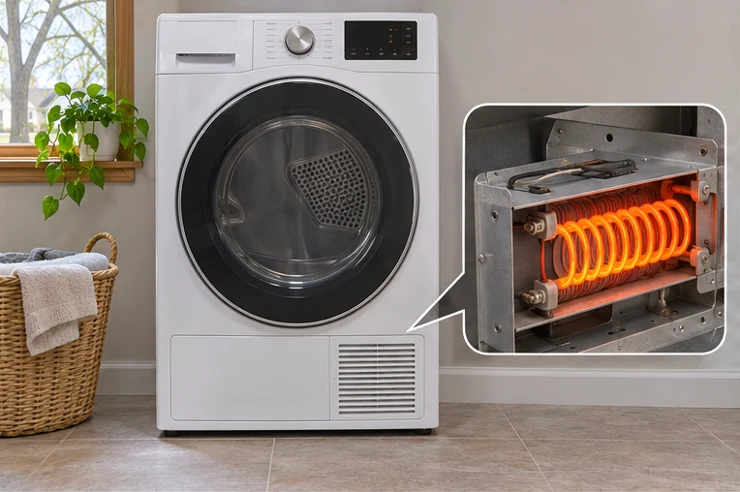
Vented electric
A resistance heater warms the air. Most full-size U.S. models need a dedicated 30 A supply and an outdoor exhaust route.
Major appliances
A vented dryer sends moist air outdoors. A ventless heat-pump dryer condenses moisture into a tank or drain and reuses heat inside the machine.
See how it works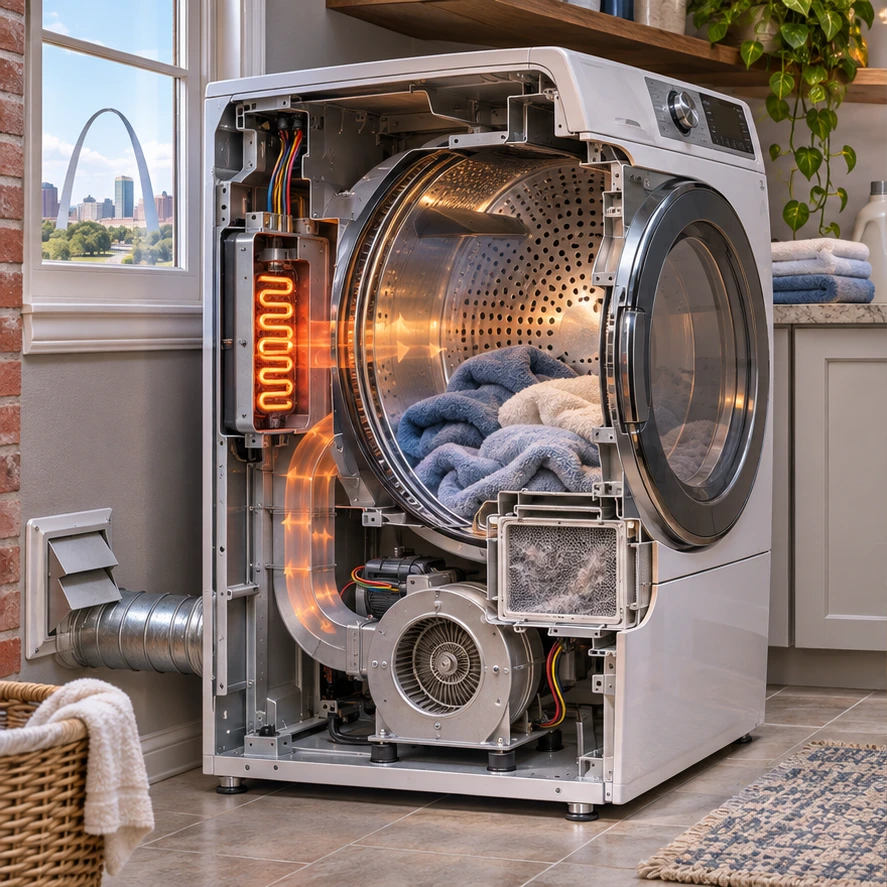
A resistance heater warms the air. Most full-size U.S. models need a dedicated 30 A supply and an outdoor exhaust route.
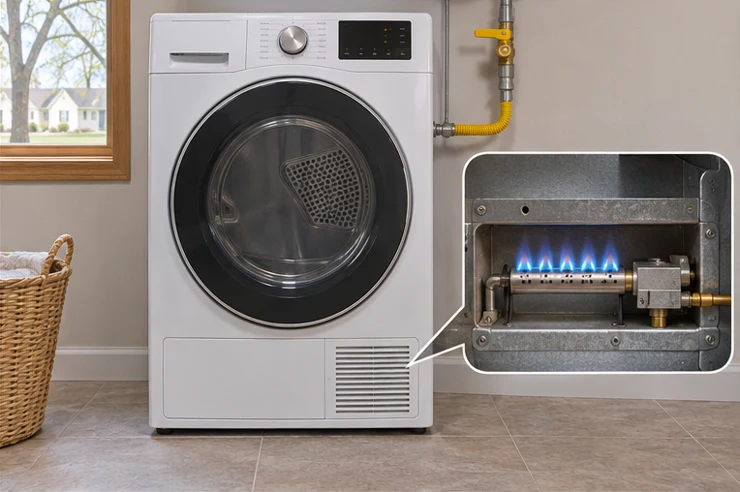
Gas provides heat. Electricity runs the motor and controls. Confirm fuel type and an outdoor exhaust route.
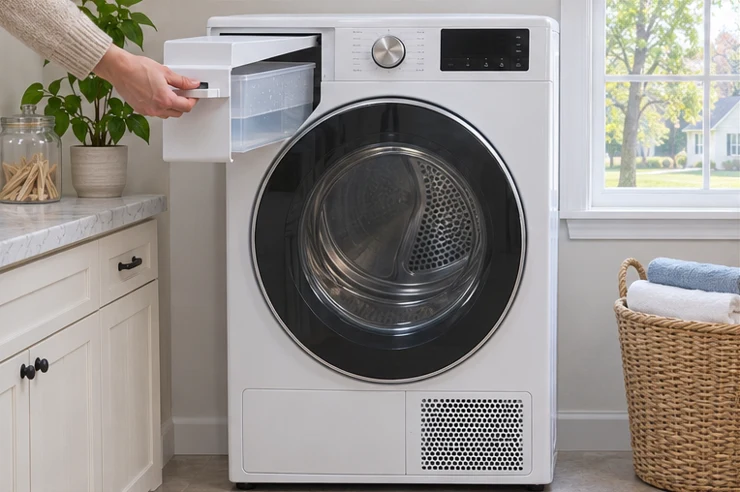
Both collect water. A heat pump recycles heat through a refrigerant loop. Compare cycle times, filter care and tank or drain access.
For U.S. homes. A NEMA code ending in P identifies the plug on the cord. R identifies the receptacle on the wall.
Match the blade or slot shapes. Your outlet may be rotated. Select a photo to enlarge it.

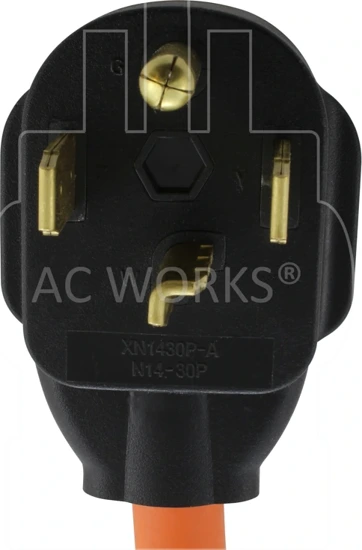
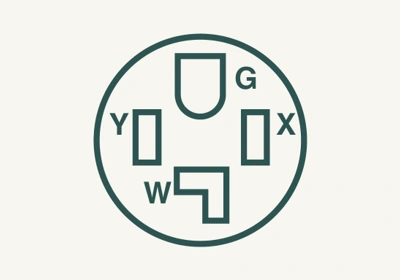
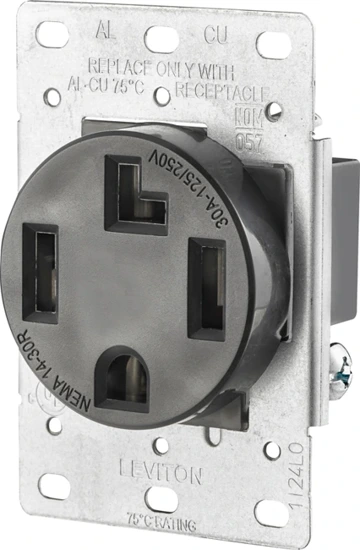

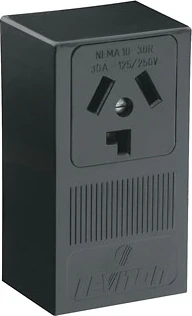

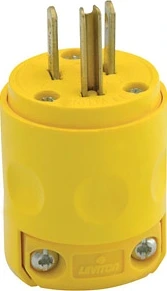
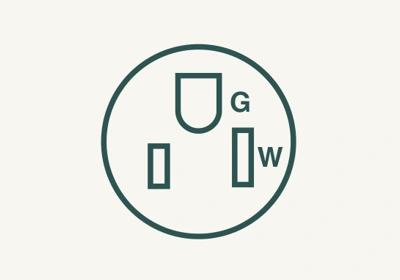
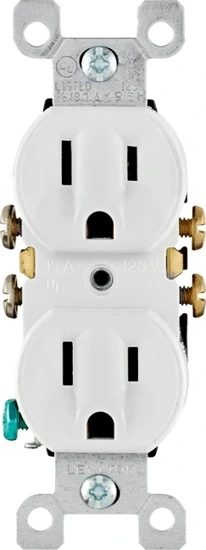
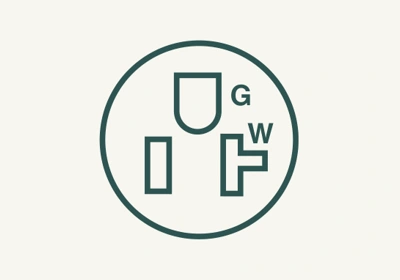
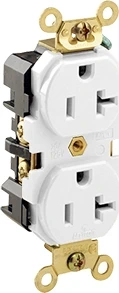
Face views adapted from the NEMA straight-blade configuration chart (PDF).
See Eaton’s illustrated 14-30 and 14-50 plugs and receptacles (PDF)
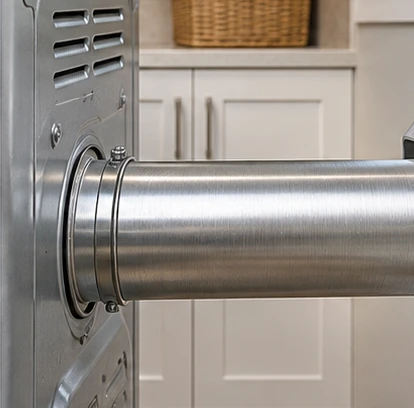
Use the dryer manual’s maximum equivalent duct length and elbow allowance for vented models. A 14-50 range outlet and a 14-30 dryer outlet serve different loads. Avoid adapters.
Before delivery, photograph the model plate and any safely visible outlet marking. Match the installation manual’s voltage, circuit rating and connection method. A matching plug shape alone cannot verify the circuit. If anything differs, have a qualified electrician check it before use. Avoid adapters or alterations to the plug.
If drying takes longer, check how wet the load leaves the washer and clean the user-accessible lint filter. For a ventless model, check its tank and additional filter instructions.
Identify the existing fuel, power supply and exhaust route. For a ventless replacement, confirm where condensate goes and how much clearance the manual requires.