

Photograph the full context
Capture the entire wall, nearby corners and openings, then close details with a ruler for scale.
FOUNDATION & BASEMENT
Cracks, leaks, bowing walls and uneven floors can share symptoms while needing very different responses. This section helps homeowners organize the evidence before they spend.
 CONCEPTUAL CUTAWAY1234
Teaching illustration—not a site-specific design. Drainage details and discharge requirements vary by house and jurisdiction.
STL HOMEGUIDE · SEE WHAT’S BEHIND THE WALLS
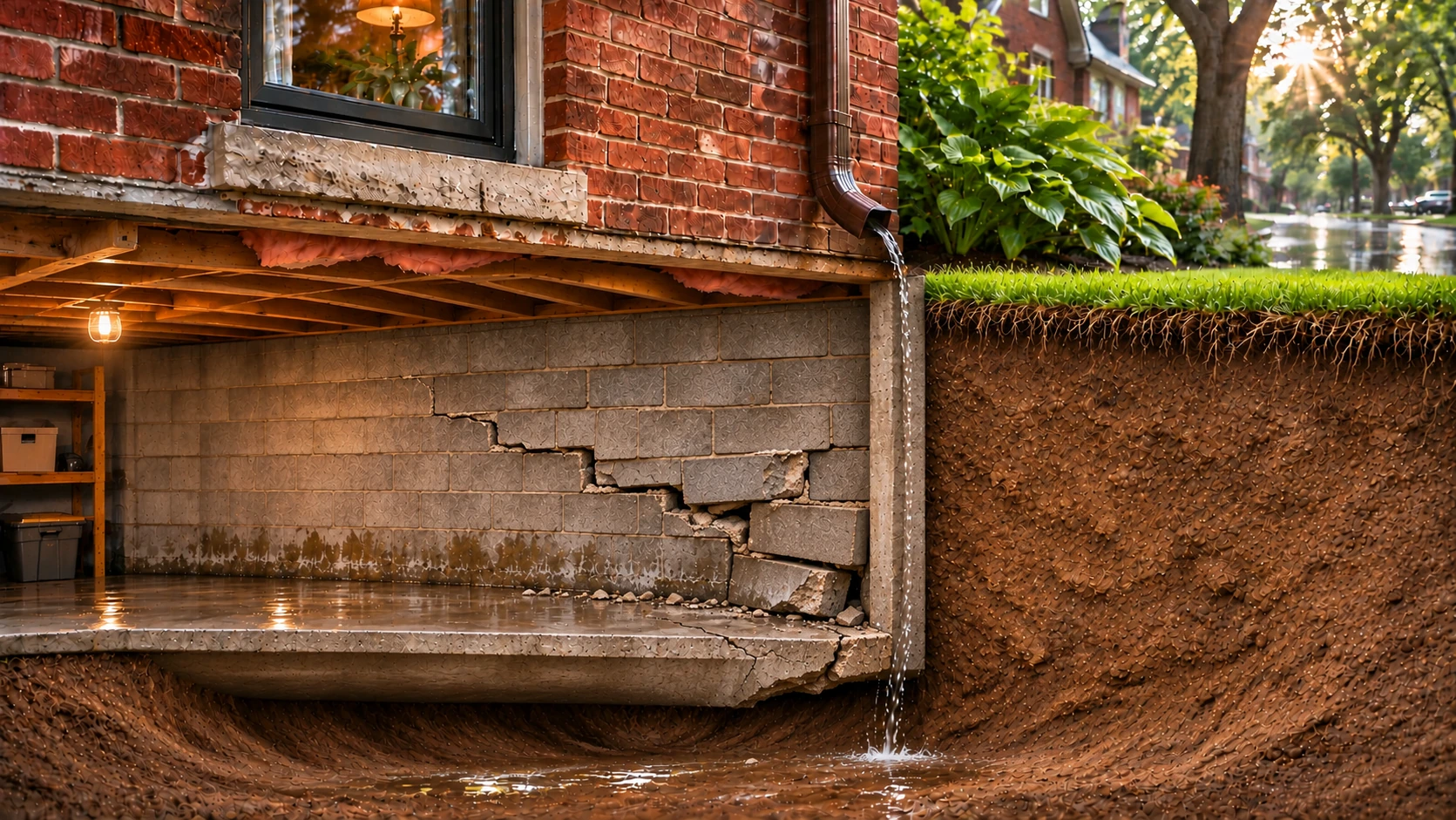
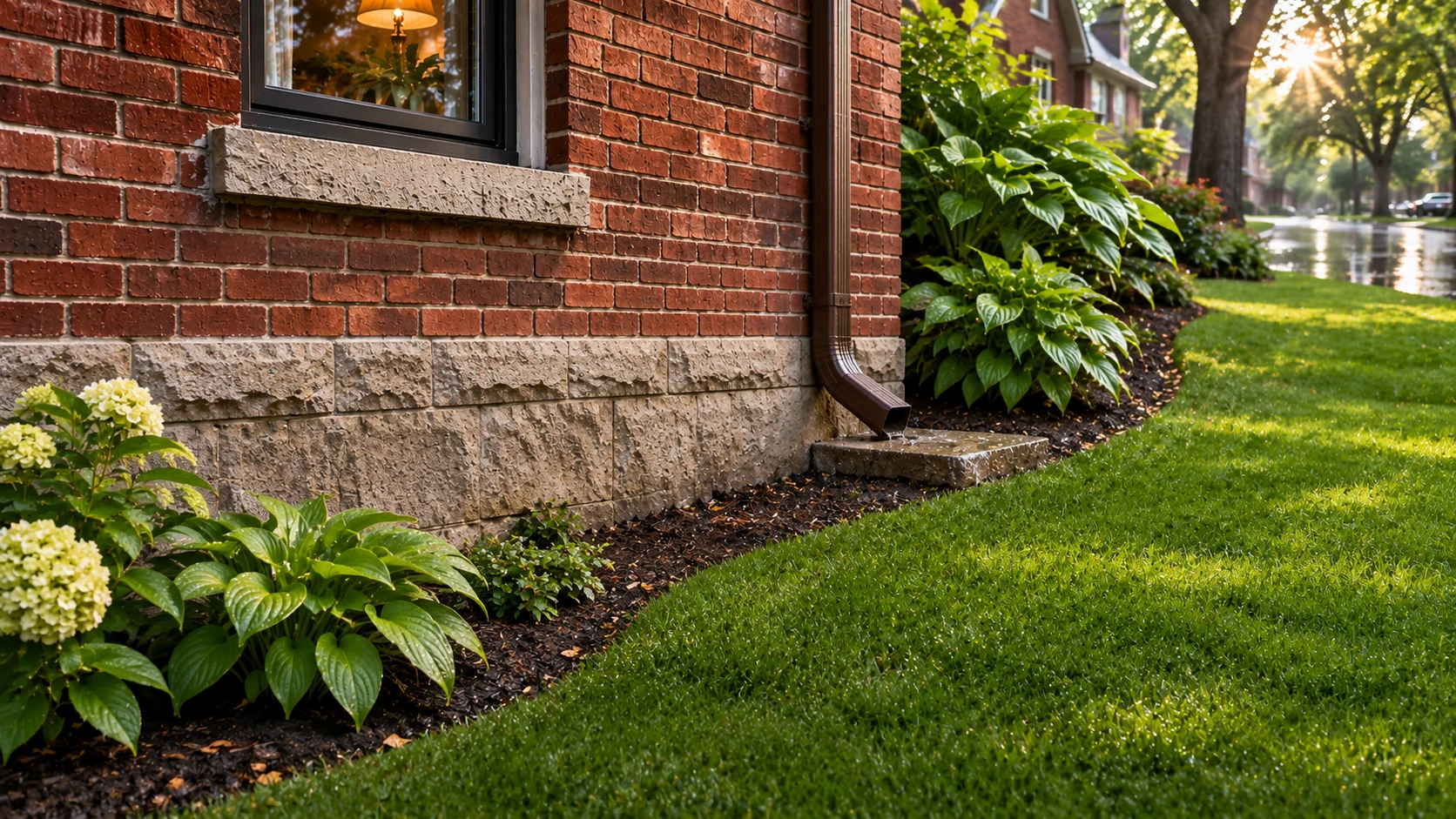
The downspout empties beside this brick house. Follow the water down beside the basement wall, then look for the exposed underside of the concrete footing. See the crack up close.
Drag across the image or use the slider and arrow keys. 95% revealed
Look beneath the footing. In this scenario, runoff flows down the wall and washes out soil beneath the footing. The unsupported corner settles, opening mortar joints and shifting the blocks above it. A crack alone cannot establish its cause.
The cutaway shows exposed roots below the downspout, a runoff channel, a broad cavity beneath the cracked corner and an open stair-step fracture with displaced blocks above the unsupported footing.
Detail from the X-ray
Follow the stair-step opening toward the right corner. The mortar joints have pulled apart, the bottom blocks have shifted, and fragments have fallen to the floor.
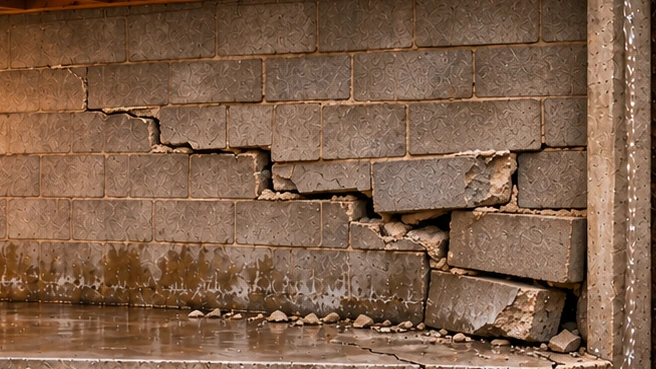
The outside view shows a downspout ending beside the brick house. In the cutaway, the soil has worn away below the outlet and roots are exposed at the lawn edge. Beneath the cracked corner, runoff has carried away the supporting soil. You can see the underside of the concrete footing above the muddy channel. The corner has settled in this illustration. Follow the open stair-step crack to the blocks that have shifted above the washout.
A downspout discharging close to a foundation may concentrate roof water next to the wall.
Repeated wetting can contribute to water accumulation in disturbed backfill. That does not establish the source in a specific home.
A sensible next step: From a safe location, watch where gutter and downspout water discharges during rain.
Exposed roots and a narrow groove mark the path of runoff in this illustration.
Repeated flow can carry fine soil out of the channel. A muddy patch by itself tells you less than a groove that grows after successive storms.
A sensible next step: Take photos from the same spot after rain. Include the outlet, the worn channel and any sediment deposited farther downhill.
The footing is the wider concrete base under the wall. Trace its exposed underside across the open gap. The muddy ground below no longer touches this section of concrete.
Surface erosion becomes a structural concern if it removes soil carrying the footing’s load. Uneven support can allow one section to settle and the wall above to crack.
A sensible next step: If you see a gap under a footing or a crack that is changing, photograph it from a safe location and ask a structural engineer to assess the support. Leave the soil in place.
Follow the open stair-step crack toward the undermined corner. The mortar joints no longer line up, and broken masonry rests on the floor.
Width, pattern, displacement and changes over time matter. A crack alone does not determine its cause or the correct repair.
A sensible next step: Photograph and date the pattern. For rapidly changing, displaced or bowed walls, seek an appropriately qualified structural assessment.
Dampness, mineral residue and wet floor-wall joints can indicate water or moisture movement.
Surface water, groundwater, condensation and plumbing leaks can produce similar symptoms.
A sensible next step: Track timing, weather and location. Avoid contaminated water and any area with electrical or structural hazards.
FIVE CLUES WORTH UNDERSTANDING
Separate what you can observe from what requires investigation.
THE HIDDEN STORY 01 / 05
A downspout discharging close to a foundation may concentrate roof water next to the wall.
Repeated wetting can contribute to water accumulation in disturbed backfill. That does not establish the source in a specific home.
From a safe location, watch where gutter and downspout water discharges during rain.
Foundation problems have many possible causes. This teaching scene cannot confirm defects, assess safety or choose repairs for a specific home.
Read the water-pressure guide ↗Healthy drainage
Start at the downspout and follow the yard downhill. The important detail is where the water goes after it leaves the pipe.

Drag across the image or use the slider and arrow keys. 52% revealed
The downspout carries roof runoff out from the wall. The lawn slopes away from the house.
Keeping runoff on a downhill path reduces the amount that can soak into the soil beside the basement.
During the next rain, look beyond the end of the extension. Does water keep moving away, or collect in a low spot and flow back?
Inside the sump
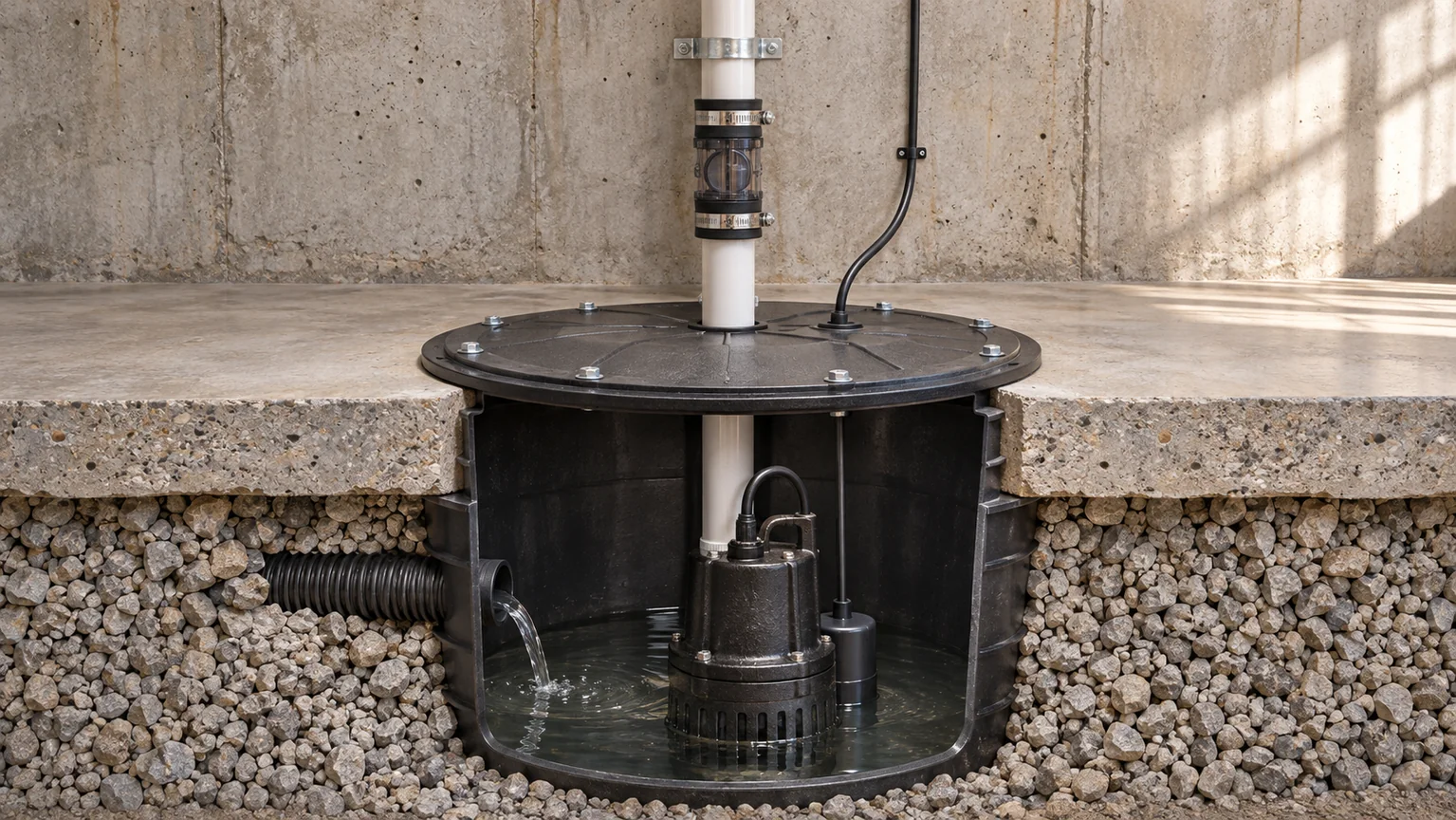
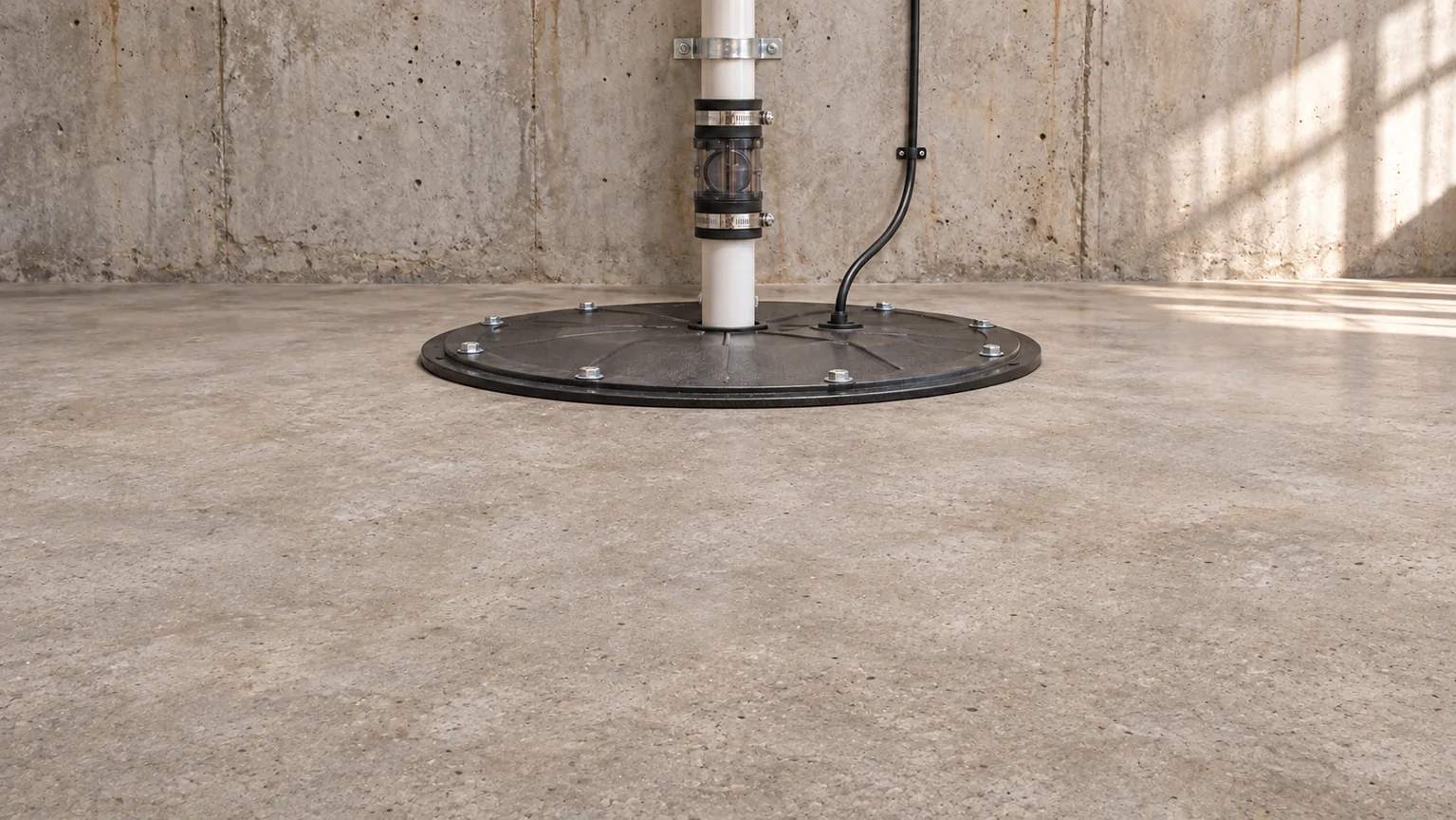
In this basement, a perimeter drain brings groundwater to a collection basin below the floor. The pump lifts it into the discharge pipe.
Drag across the image or use the slider and arrow keys. 52% revealed
From the room, the cover and the pipe rising above it are the easiest parts to recognize.
As water fills the basin, a float switch starts the pump. The pump sends water up the discharge line. A check valve limits how much drains back when the pump stops.
Listen during wet weather. When you hear a cycle, look for water at the outdoor outlet from a safe spot. Note the timing if the pump keeps restarting.
Outside discharge
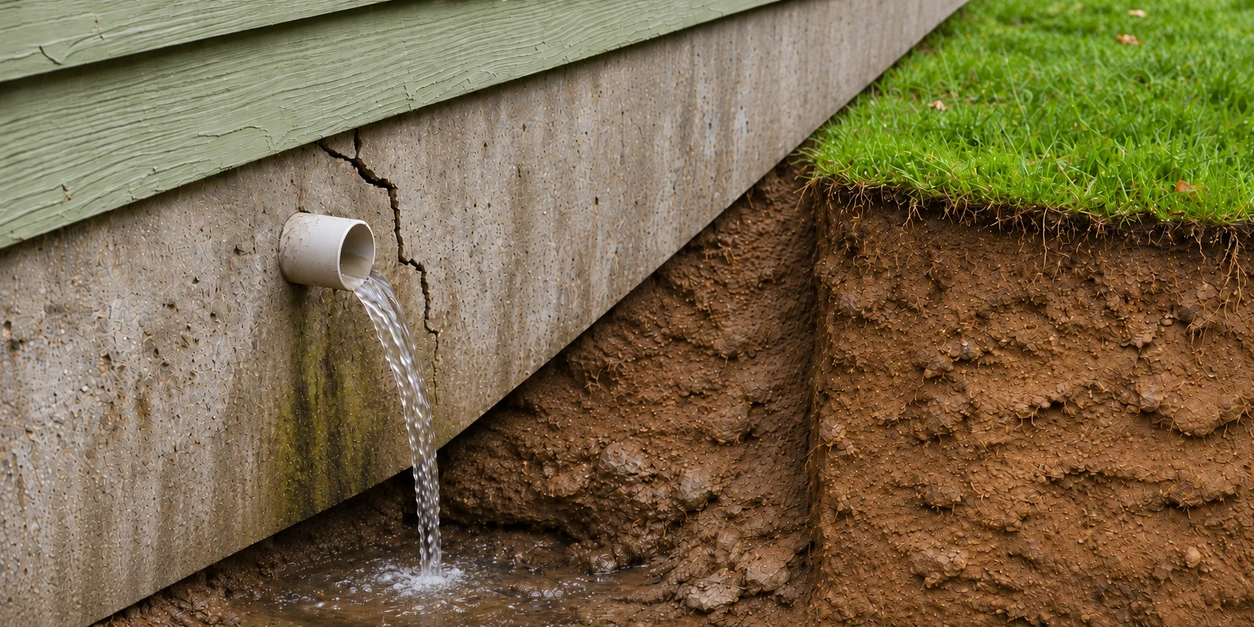
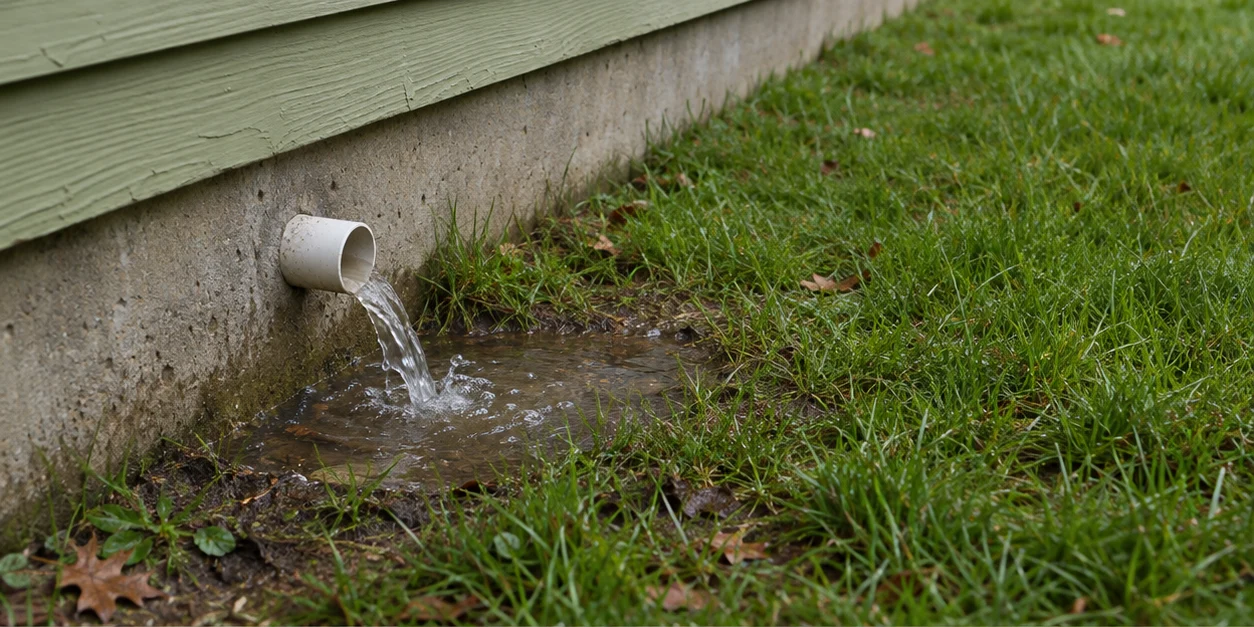
A running pump only tells half the story. Outside this house, the discharge ends close to the wall and the ground directs water back.
Drag across the image or use the slider and arrow keys. 95% revealed
Water leaves a small pipe through the wall and wets the ground beside the foundation.
Repeated discharge has washed soil from beneath this section of foundation. The illustrated corner has settled and cracked. Some discharged water can also seep back toward the sump.
Watch where the water settles after a cycle. If it returns toward the house, photograph its path and ask about an approved discharge location for your property.
START WITH THE EVIDENCE
This is orientation, not a remote structural diagnosis. Choose the closest symptom to see the safest starting point.
YOUR STARTING POINT
Document where water first appears, then check roof runoff, grade, window wells, cracks, the wall-floor joint, footing drains and sump discharge.
Open the water-pressure guideTHE LEARNING PATH
Use one guide for a specific question—or follow the sequence from symptom to repair evidence.
Compare crack directions across materials and see illustrated stabilization options. See what to check next and when to call for help.
Open guide 02MOISTURETrace roof runoff, grading, wall seepage, the wall-floor joint, footing drains and sump discharge as one system.
Open guide 03DECISIONSMatch the repair to the mechanism—from drainage and injection to reinforcement, anchors and underpinning.
Open guide 04MATERIALSUnderstand FRP straps, sheets, mesh, epoxy and polyurethane—and what each cannot solve by itself.
Open guide 05STRUCTURECompare helical piers, push piers, micropiles and other load-transfer approaches for settlement-related work.
Open guideBEFORE THE ESTIMATE
A contractor or engineer can do better work when the history is visible. Avoid fresh paint, paneling or patches that hide the pattern before evaluation.
Capture the entire wall, nearby corners and openings, then close details with a ruler for scale.
Record crack width, wall displacement and floor elevation from repeatable reference points.
Note heavy rain, snowmelt, sump cycles, clogged gutters, ponding and seasonal changes.
Keep plans, permits, engineering reports, installation logs, warranties, invoices and monitoring records.
DEEPER LEARNING LIBRARY
Use these topic clusters to explore the next level of foundation and basement education as the library grows.
HOMEGUIDE STANDARD
Structural design, soil conditions, access, drainage, foundation construction and local requirements can change the answer. Urgent movement, instability, active flooding or utility hazards need qualified on-site help.