
 Section home
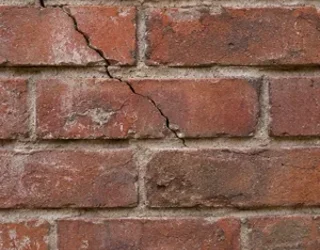 The visual crack guide
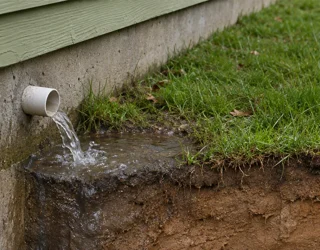 Water & hydrostatic pressure
 Repair options compared
A visibly displaced, buckled or unstable wall needs on-site structural evaluation. Do not assume a bonded strip can correct every wall geometry, connection or soil-pressure condition.
FRP BASICS
Fiber carries force in the direction it is designed to work.
Externally bonded fiber-reinforced polymer systems may use straps, sheets or mesh saturated or bonded with a compatible resin. Performance depends on the complete evaluated or engineered assembly—not carbon fiber in isolation.
SYSTEM ELIGIBILITY
Ask whether the wall and movement fit the system.
- Foundation material and wall configuration covered by the design.
- Maximum bow, displacement, crack pattern and damage allowed before other work is required.
- Required top and bottom termination or anchorage.
- Surface strength, dryness, temperature and preparation requirements.
- Obstructions, paint, coatings, efflorescence or deteriorated masonry that affect bond.
- Water and exterior pressure conditions addressed separately.
RESIN TECHNOLOGIES
Epoxy and polyurethane are not interchangeable labels.
- Epoxy injection can bond suitable cracks where structural continuity is the repair objective, but ongoing movement and the original cause must be addressed.
- Polyurethane grout or foam can be selected for water control and movement accommodation in suitable cracks or joints; it is not automatically a structural repair.
- Acrylate or other specialty grouts may be used for particular water-control conditions by trained installers.
- Cementitious and hydraulic materials can stop or patch certain leaks, but a surface repair does not remove hydrostatic pressure.
WHAT TO REQUEST
Identify the exact system and its conditions of use.
- Manufacturer, product and current technical data.
- Applicable ICC-ES report, code report or signed engineering design where relevant.
- Wall measurements, design spacing and termination details.
- Installer training or authorization required by the system.
- Batch, temperature, moisture and substrate-preparation records.
- Warranty terms and inspection or monitoring plan.
LIMITS
Reinforcing the wall does not automatically manage the site.
A reinforcement proposal should still address why the wall was loaded, whether drainage needs correction, whether the floor system and slab provide the assumed restraint, and whether settlement or exterior geometry changes the solution.
SOURCE TRAIL
Technical references
These are starting references, not a project design. Product eligibility, code acceptance and installation conditions must be checked for the specific home.
Defines the structural-repair objective and conditions that can make epoxy injection unsuitable.
REFERENCEICC Evaluation ServiceEvaluation Report ProgramHow proprietary system reports identify products, code bases, installation and conditions of use.
REFERENCEICC Evaluation ServiceApproved acceptance criteria searchIncludes criteria used for FRP strengthening systems and helical pile systems.