Happy Thanksgiving, St. Louis! Independent homeowner guidance

Major appliances

Clothes washers

The wash cycle loosens soil, the pump drains the tub and the spin cycle extracts water before the load goes into the dryer.

See how it works
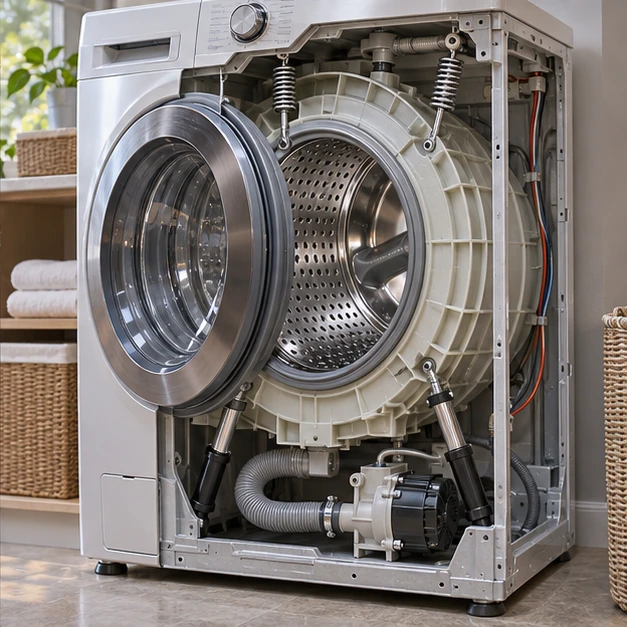
Illustrated cutaway of a front-loading clothes washer
A front-loading clothes washer · Illustrative cutaway. Component placement varies by model.

How it works

  1. Inlet valves meter water into the outer tub. A horizontal perforated drum lifts and tumbles clothes through wash water.
  2. Water passes through the drum holes into the outer tub. The drain pump draws water from the low point and sends it up the drain hose.
  3. High-speed spin extracts more water from fabric. A bulky, unbalanced load can interrupt spin and leave clothes wet even after the tub drains.

Types you may encounter

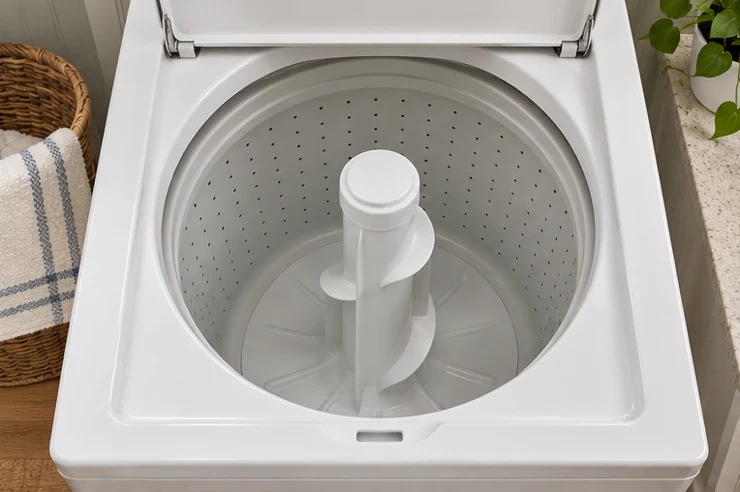
Tall agitator in the center of the basket

Top-load with agitator

A tall central post moves clothes through water. Check lid clearance and whether you can reach the bottom.
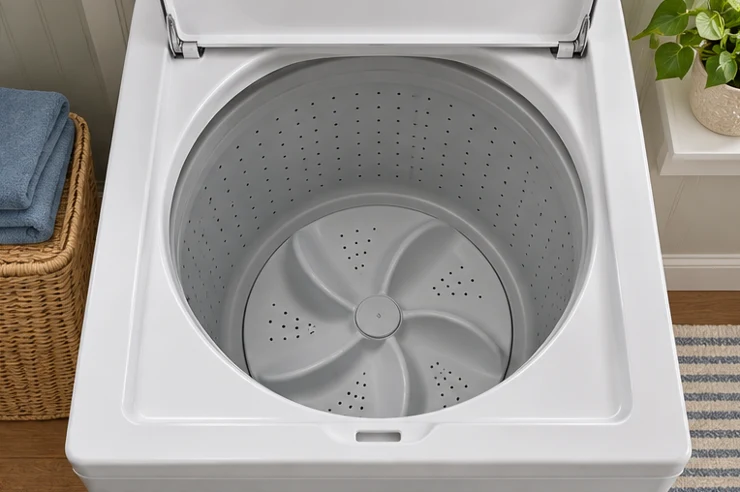
Low-profile impeller at the bottom of the basket

Top-load with impeller

A low-profile wash plate leaves room for bulky items. Loading evenly matters for balance.
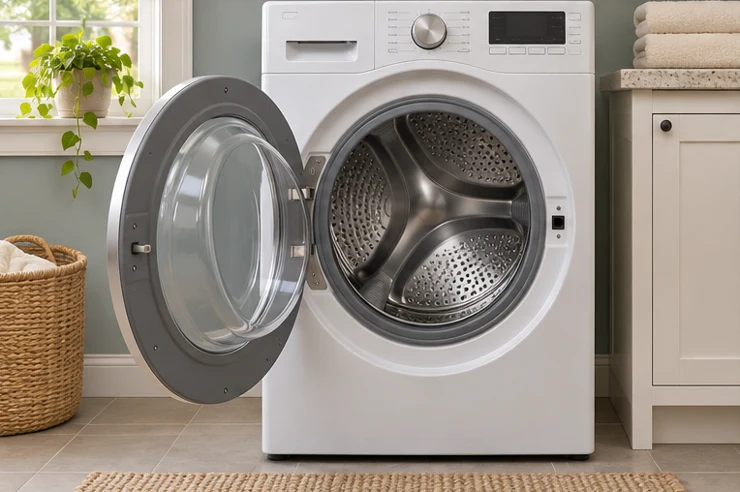
Front-loading washer with the door open

Front-load

The horizontal drum tumbles the load. Check door swing, gasket access and compatibility before stacking.
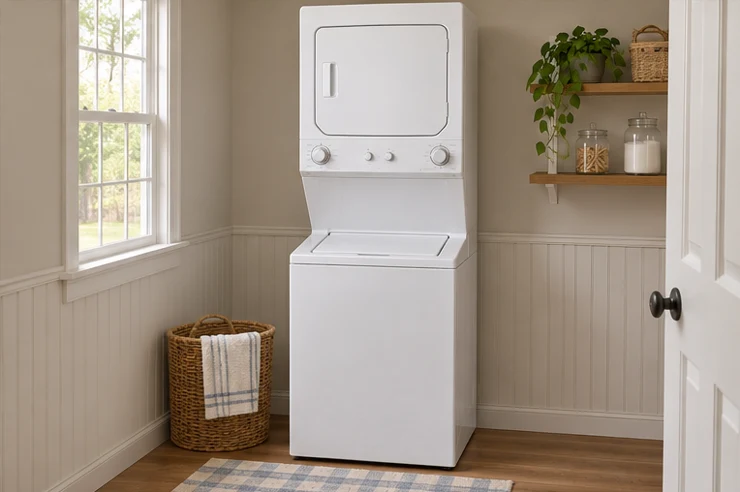
Stacked laundry center

Laundry center or all-in-one

A laundry center stacks two compartments. An all-in-one washes and dries in one drum. Verify the electrical requirements for the complete model.

Plugs & hookups

For U.S. homes. A NEMA code ending in P identifies the plug on the cord. R identifies the receptacle on the wall.

Match the blade or slot shapes. Your outlet may be rotated. Select a photo to enlarge it.

Common 120 V cord and outlets

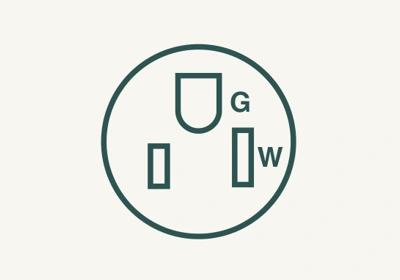
DiagramFace view of NEMA 5-15P
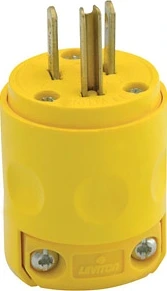
Product photoActual 5-15P plug showing its blades
5-15PCord plug · Two parallel blades and a grounding pin.Photo by Leviton
DiagramFace view of NEMA 5-15R
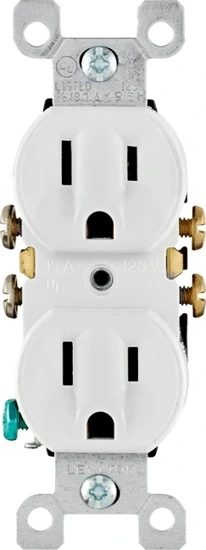
Product photoActual 5-15R outlet showing its slots
5-15RWall outlet · Two straight slots and a grounding opening.Photo by Leviton
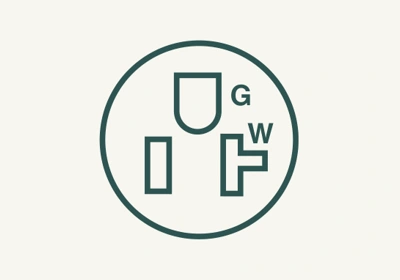
DiagramFace view of NEMA 5-20R
Product photoActual 5-20R outlet showing its slots
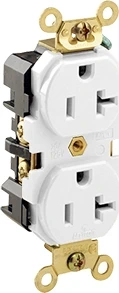
5-20RWall outlet · The T-slot also accepts a 5-15P plug.Photo by Leviton

Face views adapted from the NEMA straight-blade configuration chart (PDF).

Typical separate washer
Usually a grounded NEMA 5-15P plug for a 120 V supply. Its two parallel blades and round grounding pin fit a 5-15R receptacle or a T-slot 5-20R. GE specifies an individual 15 or 20 A circuit for these models.
Combined laundry equipment
A unitized electric-dryer pair may need one 208/240 V, 30 A supply. Some heat-pump all-in-ones use 120 V. Separately stacked machines can need two distinct connections. Check the full model number.

See Leviton’s 5-15R and T-slot 5-20R receptacle reference (PDF)
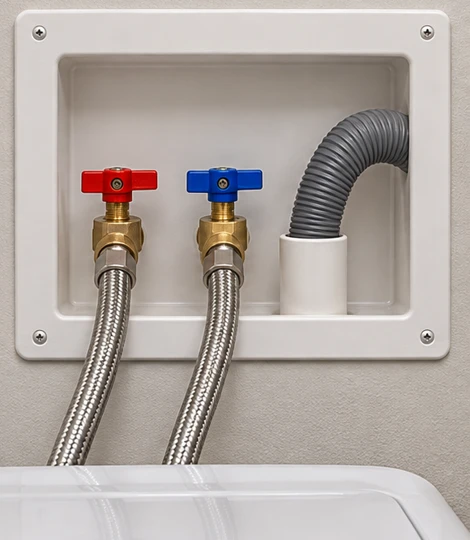
Other connections

Washer supply hoses, shutoffs and drain connection

Check the hot and cold valves, hose reach and the manual’s standpipe height range. A compact machine may specify cold fill only.

Before delivery, photograph the model plate and any safely visible outlet marking. Match the installation manual’s voltage, circuit rating and connection method. A matching plug shape alone cannot verify the circuit. If anything differs, have a qualified electrician check it before use. Avoid adapters or alterations to the plug.

Before the service call or delivery

First check

A heavy blanket comes out dripping? Note whether the tub still holds water or only the fabric is wet. Check the selected spin speed and the manual’s guidance for bulky loads.

Measure the fit

Allow space for hoses, the door or lid, and access to the water valves. For a stacked pair, confirm the exact model combination and approved stacking kit.

Manufacturer references

Explore the other major appliances